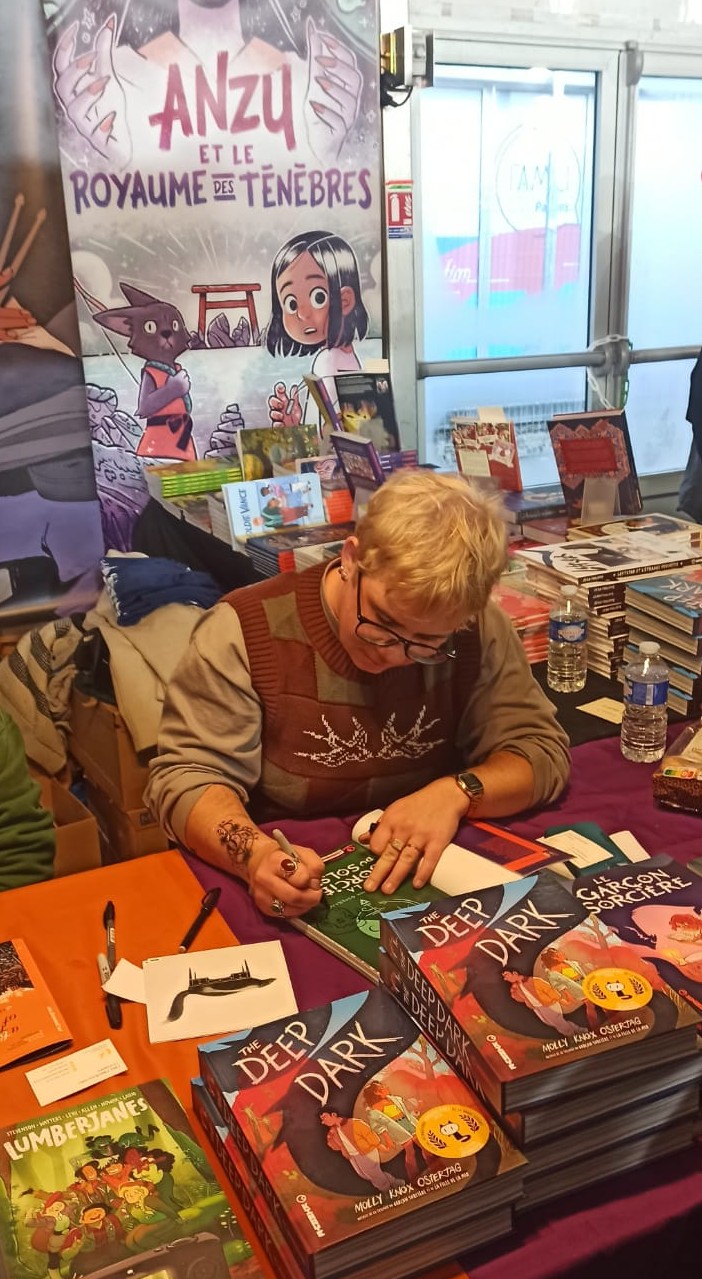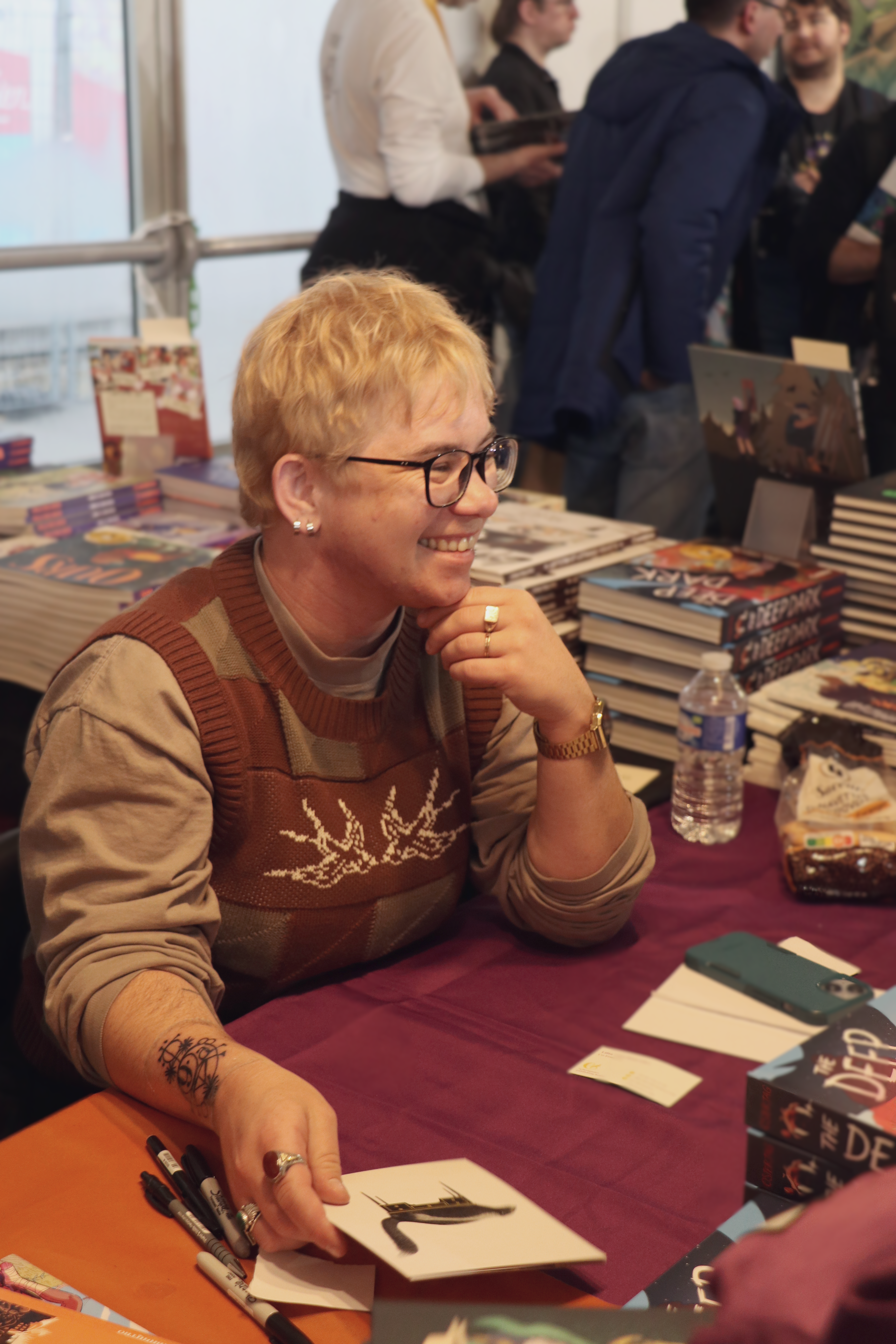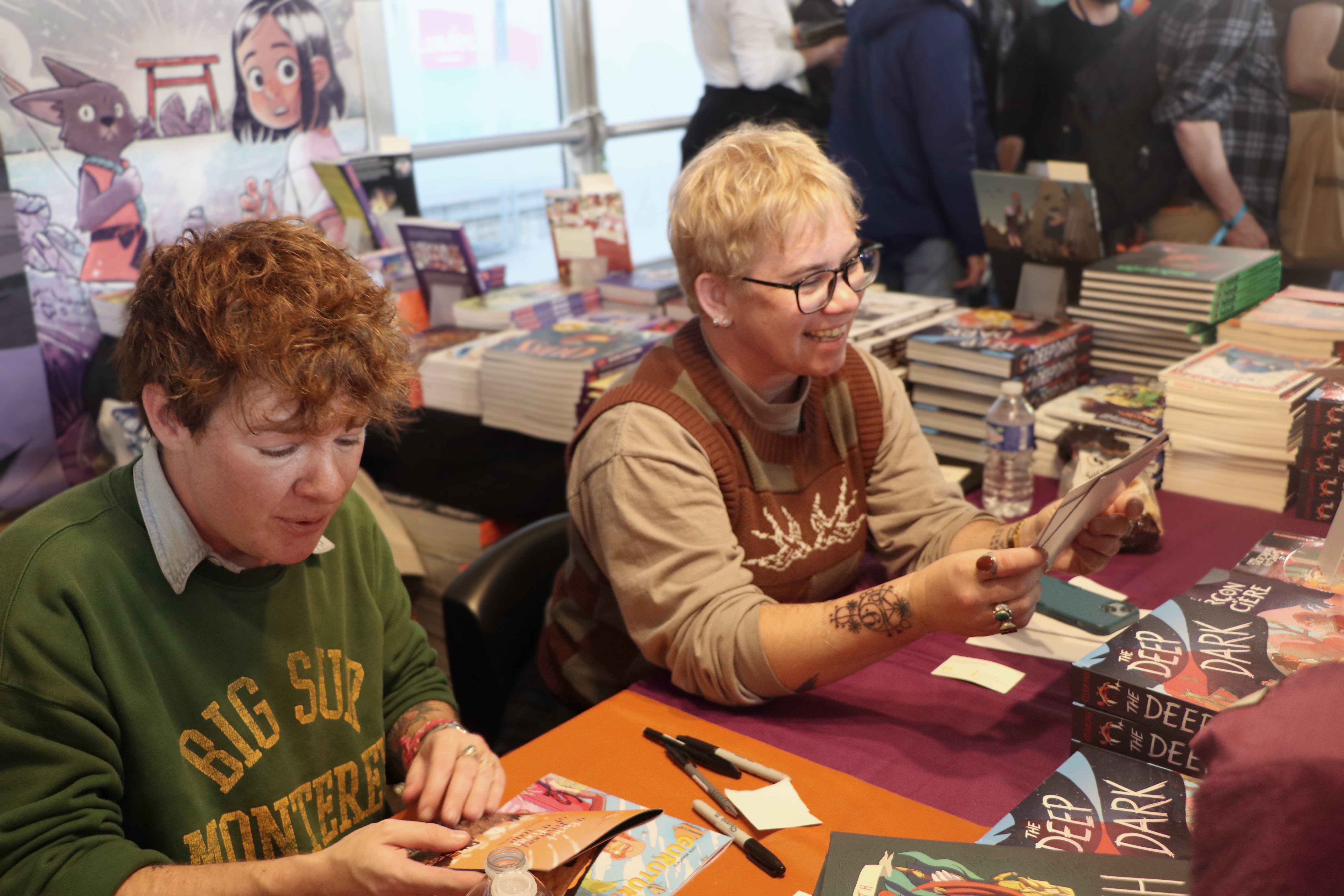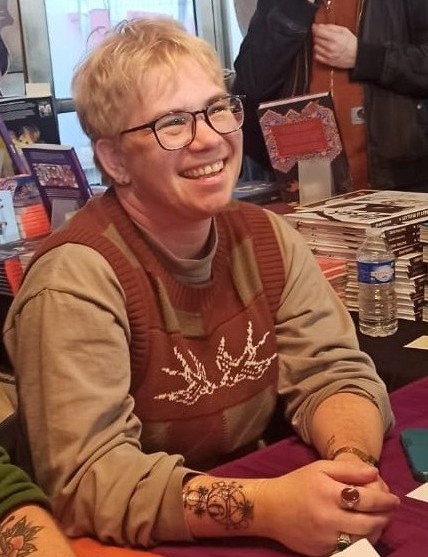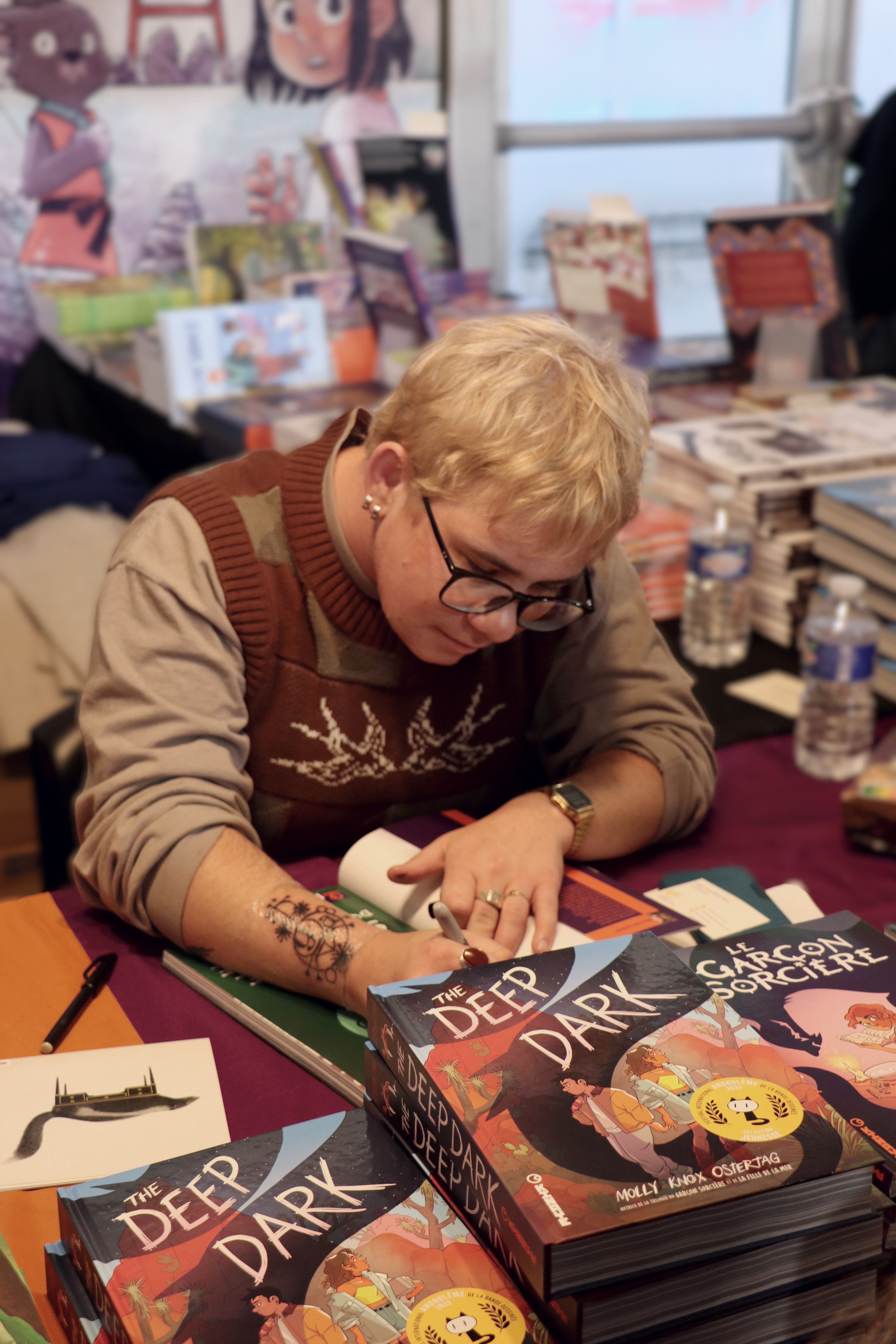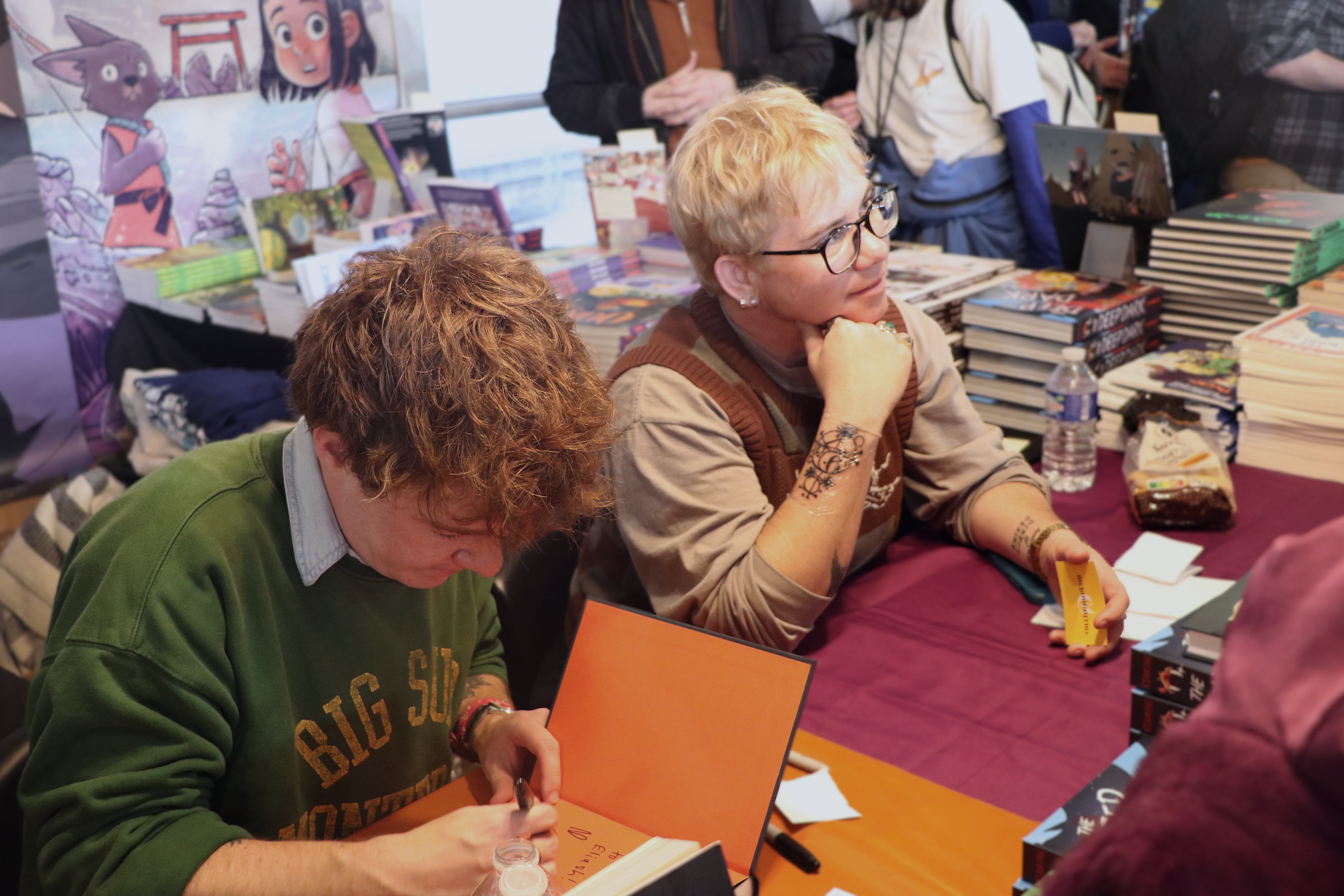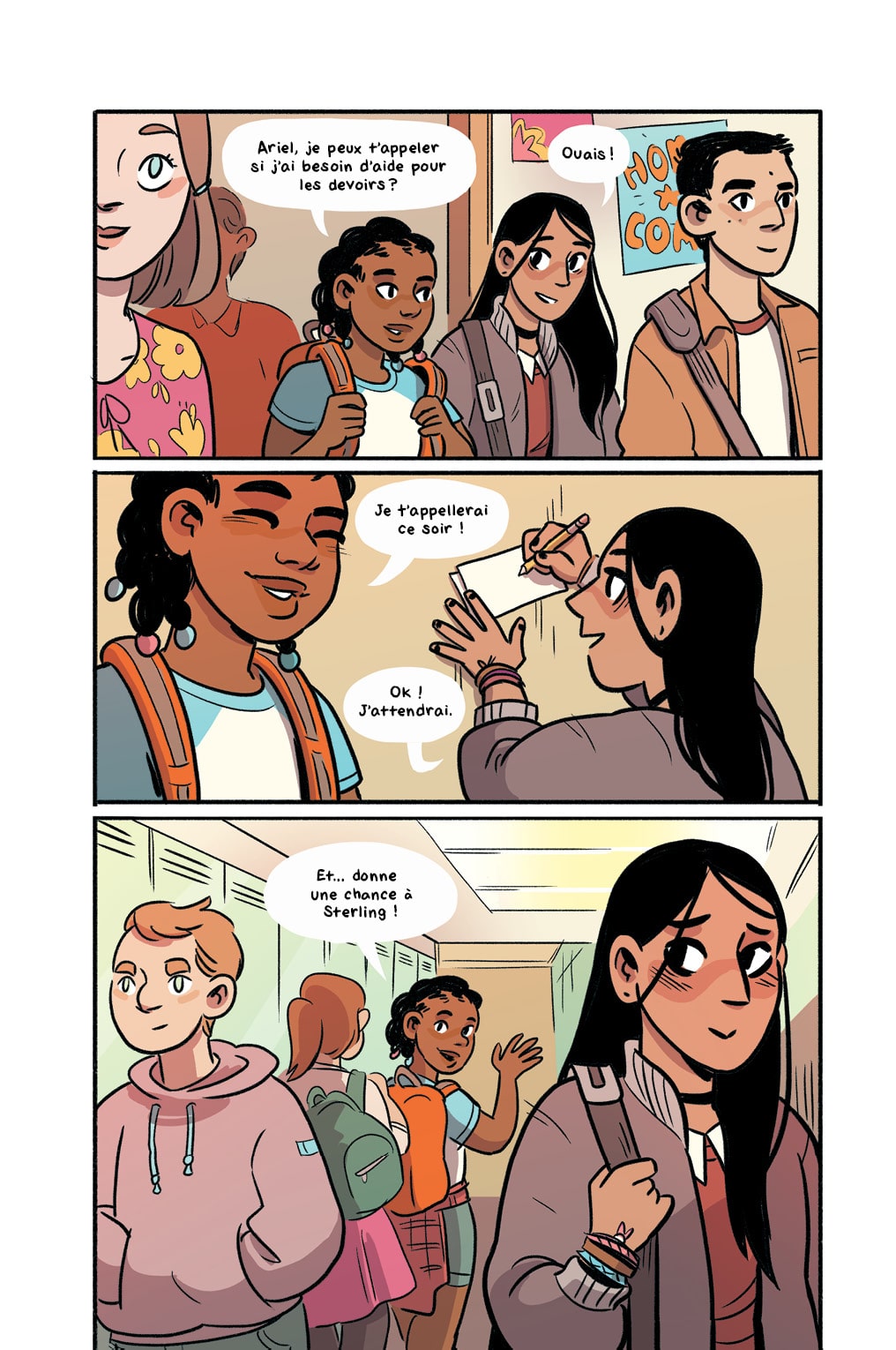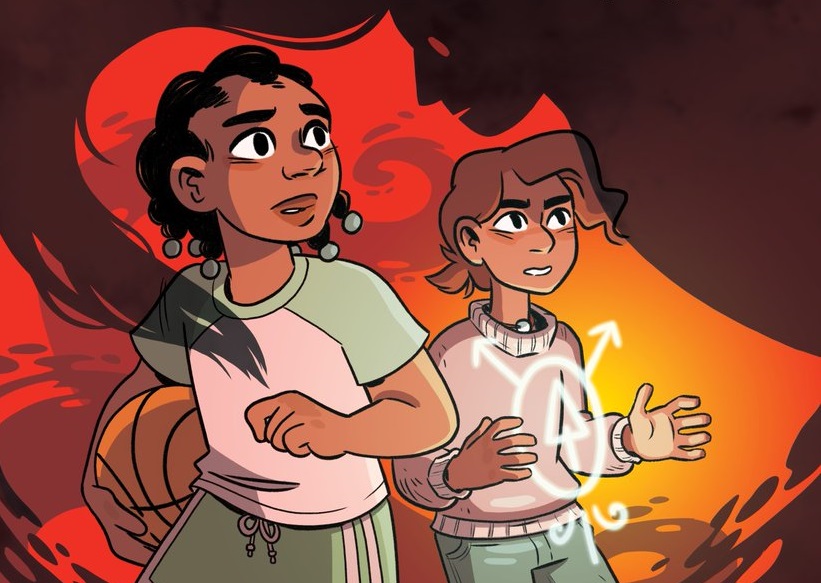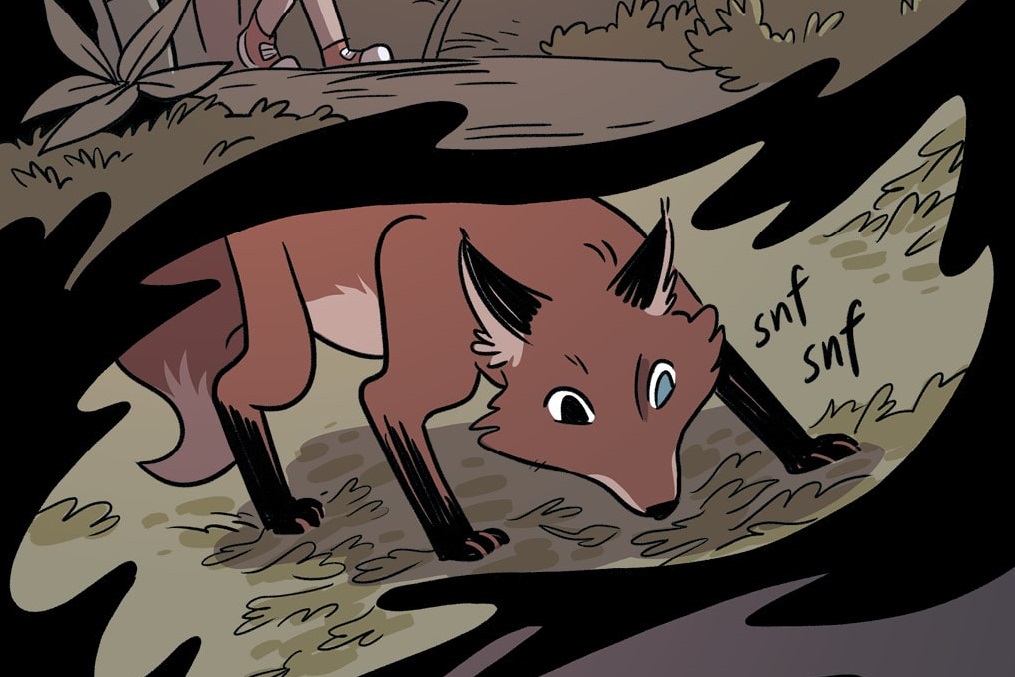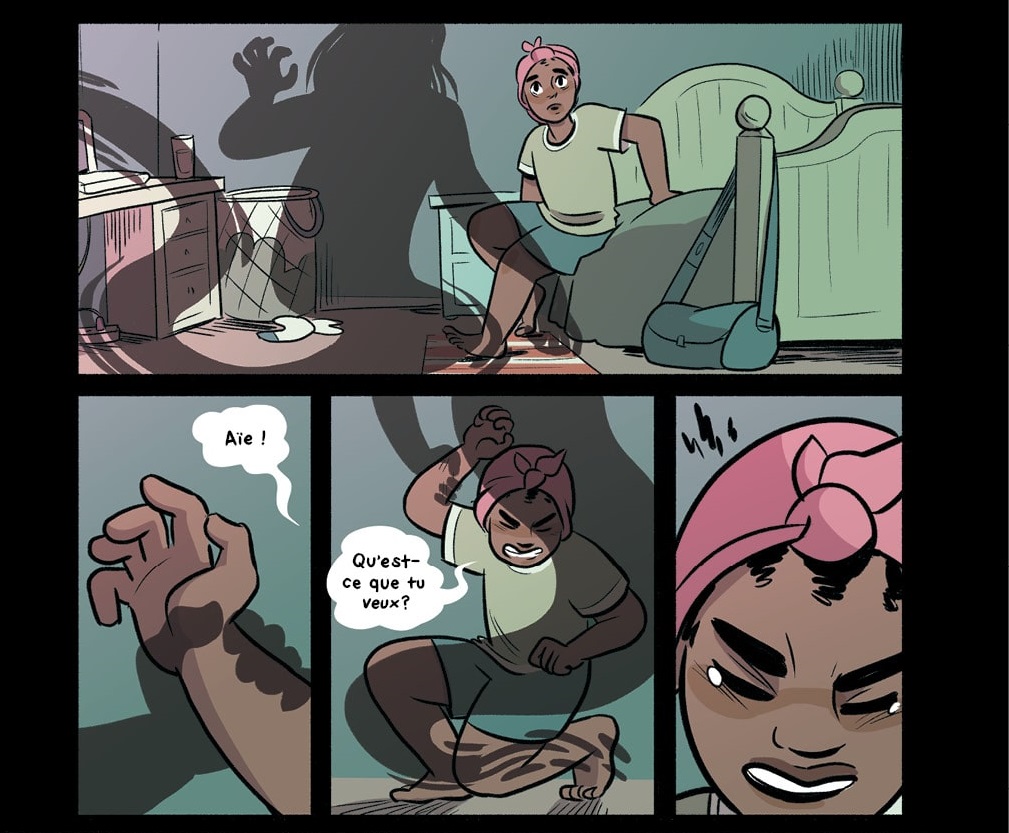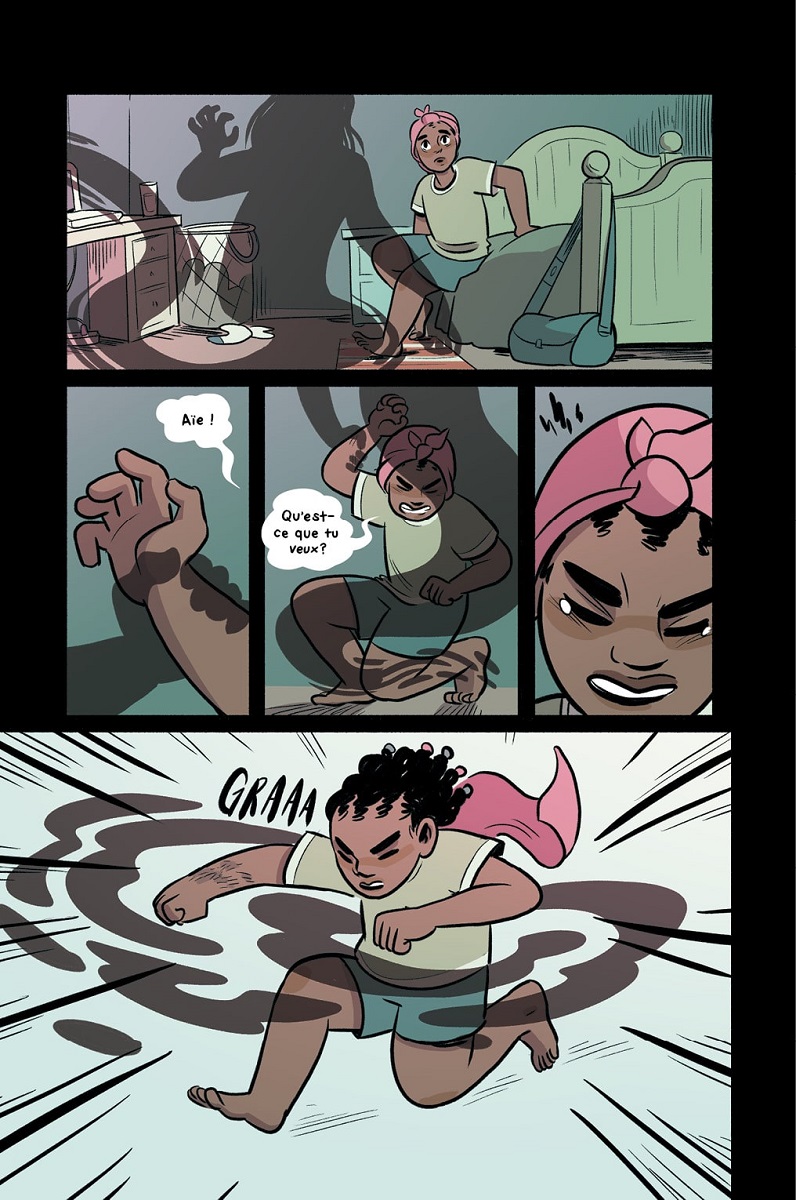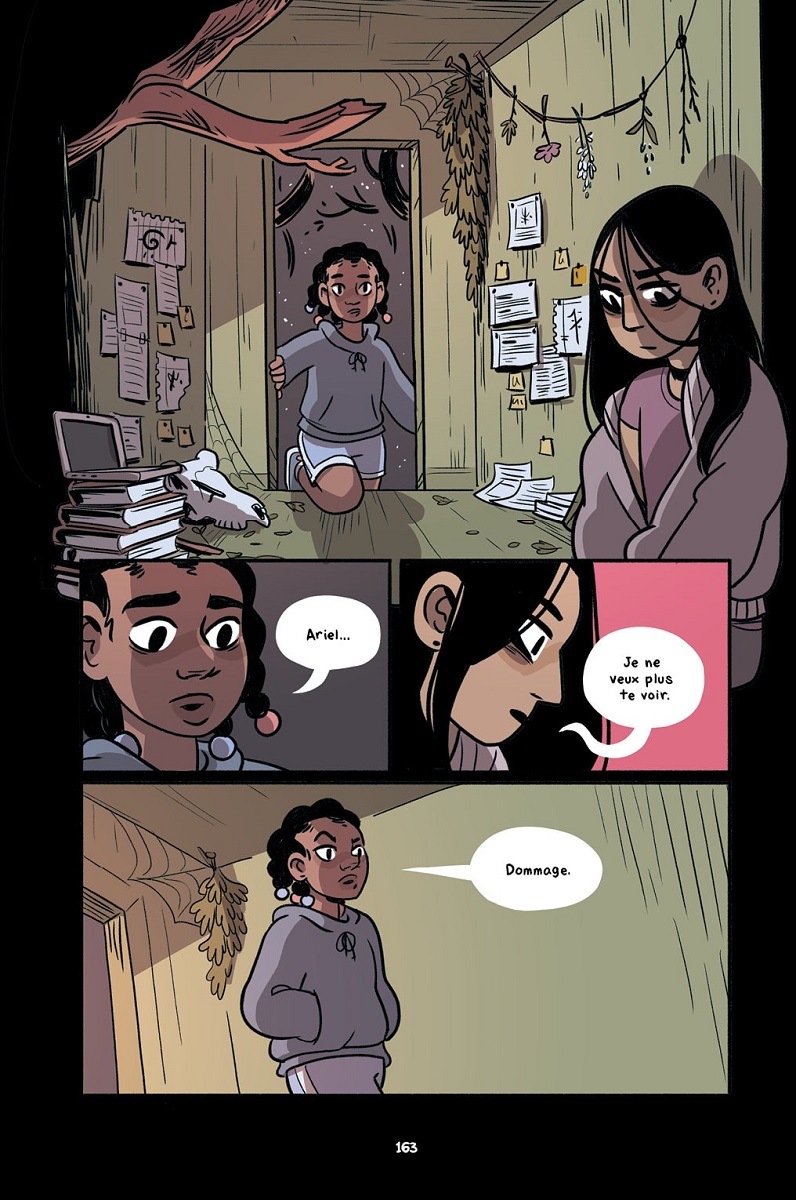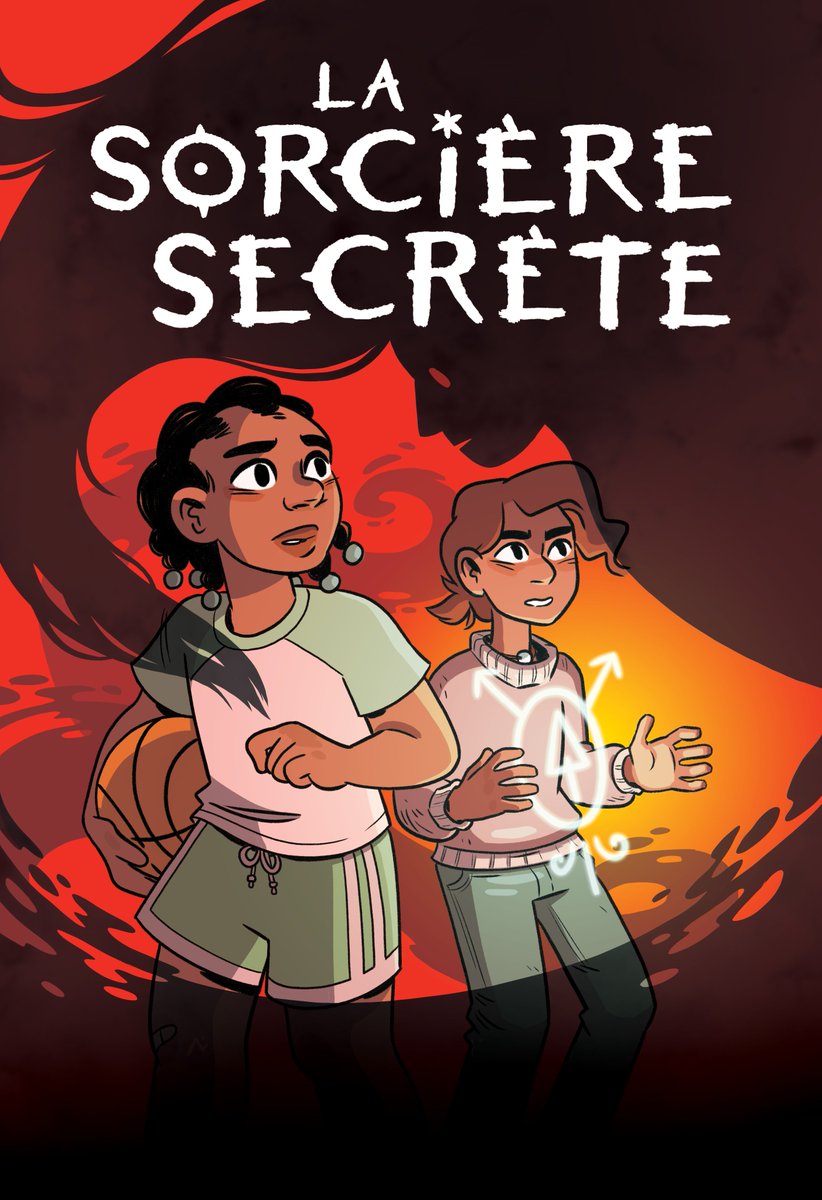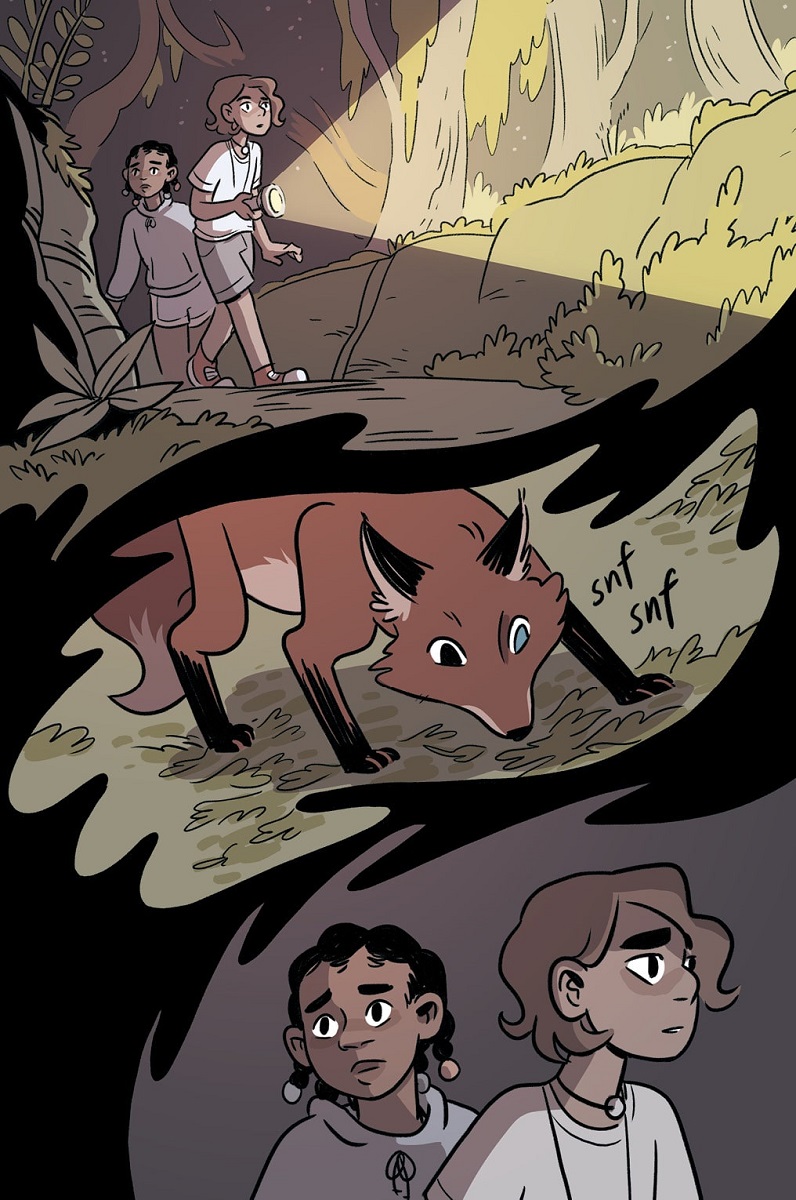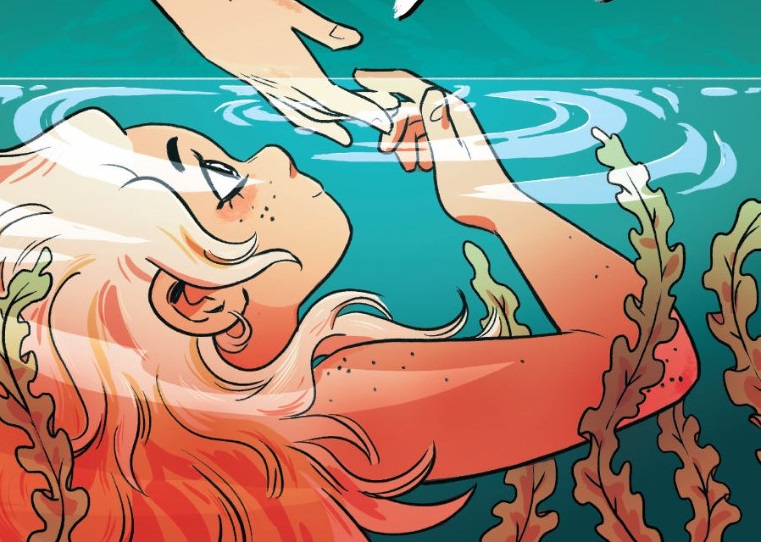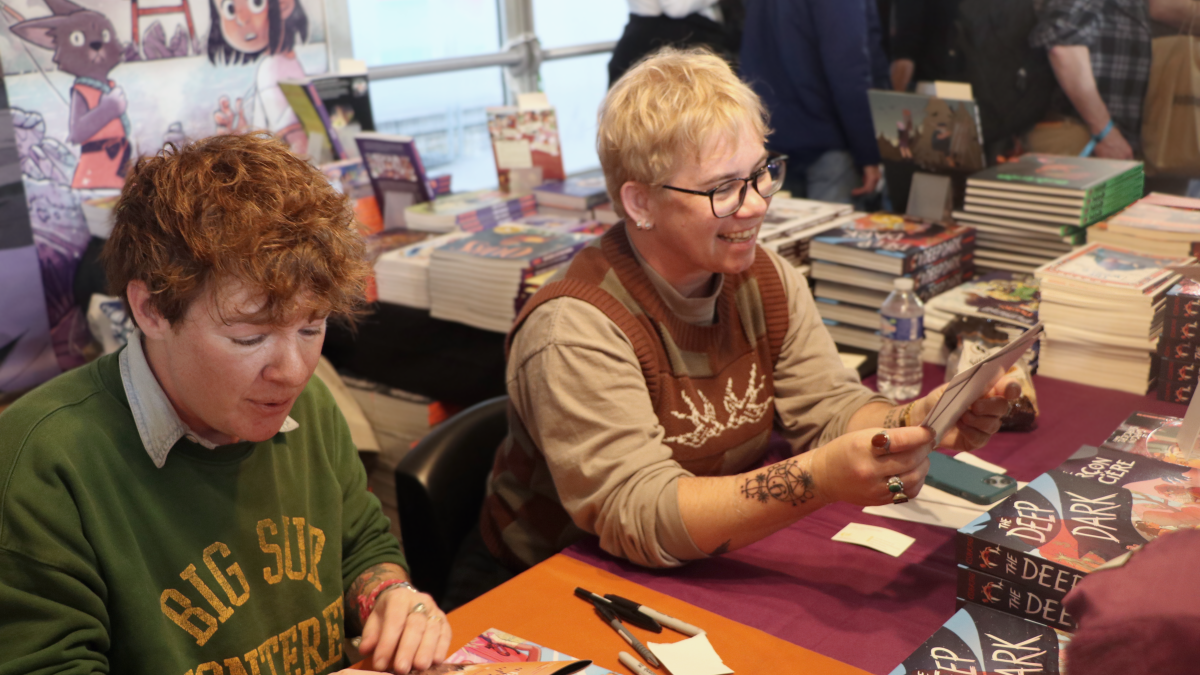


Molly Knox Ostertag (The Witch Boy & The Deep Dark) is one of the American authors that the Comixtrip editorial team greatly appreciates. We met her at the Angoulême Festival. Between imaginary and fantasy, between adolescence and queer characters, between romance and censorship, we dive into the intelligent universe of this committed and militant artist.
How does that make you feel to be here in Angouleme for that big event ? Is it the first time you travel to France ?
It is not my first time ! I first came when I was 19 and I had no money and I traveled all around for weeks and more recently I was here for the Annecy Animation Film Festival. My partner’s, N.D Stevenson, film Nimona was screening, so we were there and it felt very similar to this. It was really amazing. But this is my first time at the Angouleme Festival.
“But then as soon as publishers wanted to put them into a physical form, that was always how I imagined my work being.”
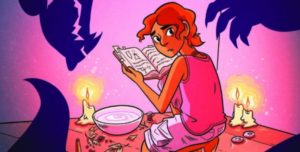
You have a big presence on the internet and regularly publish your work in progress, why did you go for physical publications ?
That’s funny, I’ve been trying to post less, but the call of the internet is very hard to avoid. I always wanted to publish books, I just grew up loving books, and so the internet felt like the way to put my stories out there. But then as soon as publishers wanted to put them into a physical form, that was always how I imagined my work being.
Since then I’ve made a couple things that I think are meant to be on the internet, but most of my books I’m intending for them to be in the final form as a printed book.
“For a while I was sending all the subscriptions to a trans charity.”
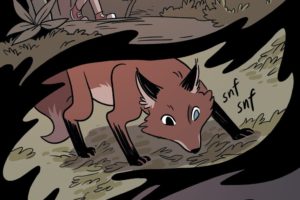
About your online work, the In the Telling subscriptions goes to a trans rights foundation, is it because you find enough remuneration with the physical sales ?
I actually right now don’t have any paid subscriptions on my work because I like to just share it as much as possible.
For a while I was sending all the subscriptions to a trans charity.
I received a grant from Substack to make work basically for a year, so they gave me a really nice amount of money to make work for a year and I could do whatever I wanted.
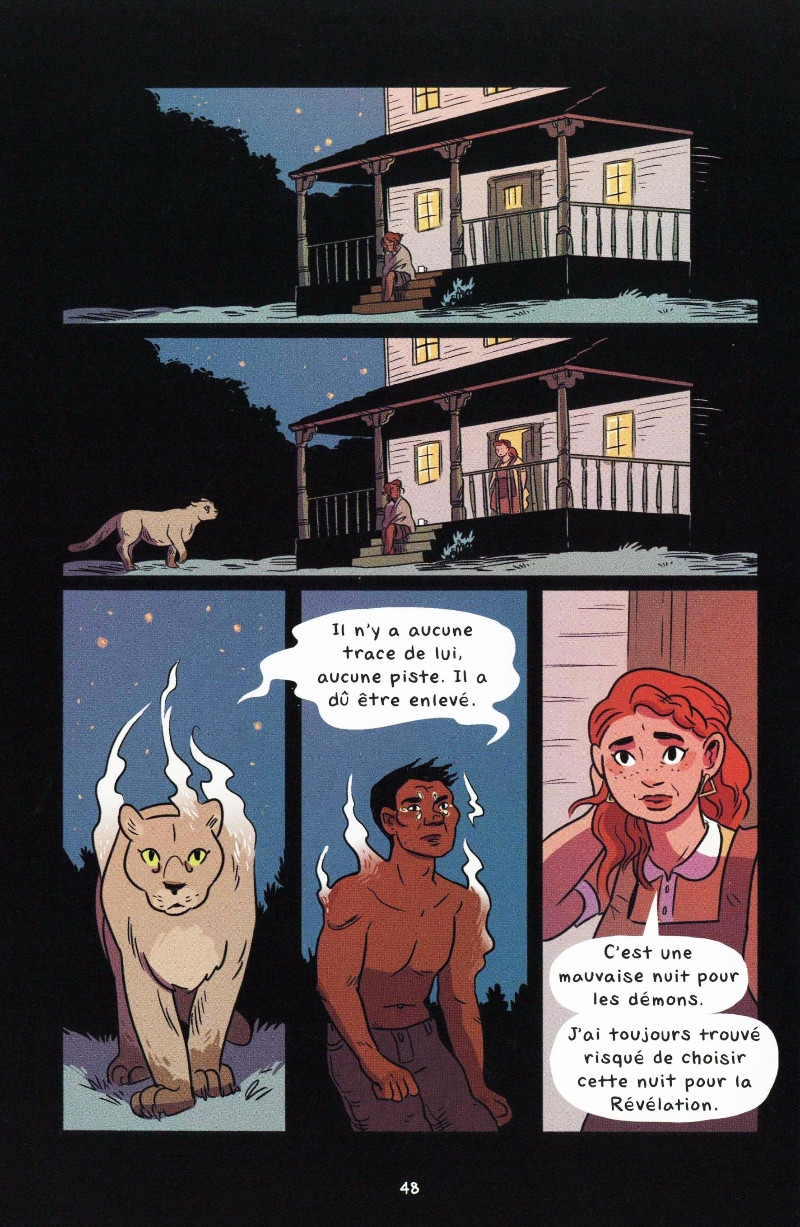
I sort of did a graphic novel class on my Substack In The Telling and I did Darkest Night which eventually became The Deep Dark. So they had already given me that grant so I figured that the other money I got from subscriptions I wanted to donate.
But outside of that most of my income comes from the physical books and comes from royalties. It does not work for everybody but I’ve been really really lucky to be able to make most of my living off that. I think I’ve been really lucky to work with Scholastic, which publishes these books for middle grade and young adult readers, and they’re so popular right now so, they’re selling a lot to schools and libraries and that’s a lot of where my income comes from.
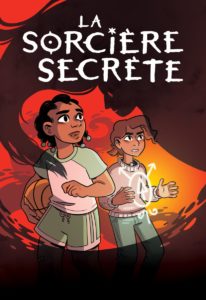
One of your first book published in France was published in Rue de Sèvres, the rest was in Kinaye. So, what’s your relationship with your French publishers ?
It honestly mostly goes through my publisher, so they approach Scholastic and ask for the rights to translate it. So Romain Galand is the first person that I’ve really talked to from a foreign publisher, but he’s been really kind and has been trying to bring me to France for a couple years now. So, I’m really glad that we managed to make it this year !
“I feel like books have a very powerful effect on young people and that’s always the audience that I want.”
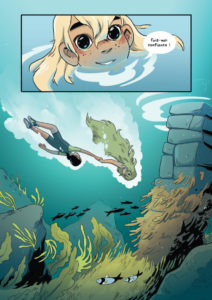
All of the books that have been translated and published in France have something in common : teenage years. Why is it important for you to write about those years ?
I mean, teenagers read graphic novels in the States. It’s much more popular among teenagers. It’s harder to get adults to read them. But also, I love teenagers.
I remember what it was like at that age. I remember looking for books to lose myself in and to really either escape from the world or to try to find out more about myself through books. So, I feel like books have a very powerful effect on young people and that’s always the audience that I want.
“All of my characters have something of me in them.”
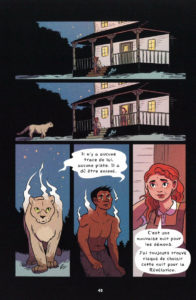
So, Do you rely on your own teenage memories to imagine your stories ?
Yeah ! I’ve never written autobiography because that’s very hard for me, but all of my characters have something of me in them.
And I have a theory that, for me at least, it takes me about 10 years to process an event. So The Witch Boy I wrote in my early 20s and it’s about children and they’re 11 to 14. As I get older my characters are also getting older, so The Girl From the Sea it’s about a girl who’s 15, The Deep Dark is about girls who are 18… It’s kind of processing those feelings as they come up and as they sort of cycle through my brain.
“It is about giving kids who are queer who maybe don’t have the language for it or don’t quite know how to think about it giving them a model to approach that part of their identity.”
And so why do you think teenage years are a suitable time period to write stories about ? Why is it important for you ?
You’re going through a lot of change, you’re finding out who you are and you often really latch onto characters at least I did. I would really attach myself to characters and try to be like them or want to spend time with them and I would use that to define myself. So I think that there’s something about providing those characters especially.

Most of the characters in my books are queer and it is about giving kids who are queer who maybe don’t have the language for it or don’t quite know how to think about it giving them a model to approach that part of their identity. So that’s definitely a part of it.
Then it’s just interesting, you’re going through so many events for the first time you’re having so many feelings for the first time everything feels really really big and really intense and that translates very well.
I recently have started enjoying making work about adults as well and I’m sure that I’ll do more of that in the future but there is just something very fun and elemental about making work for that age group.
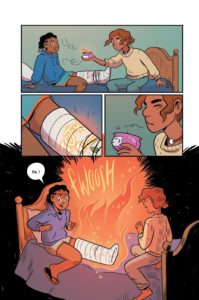
Why did you decide to use fantasy to talk about those subjects ?
Well so many reasons that I use fantasy and I think actually as my books have gone on they’ve gotten less fantastical.
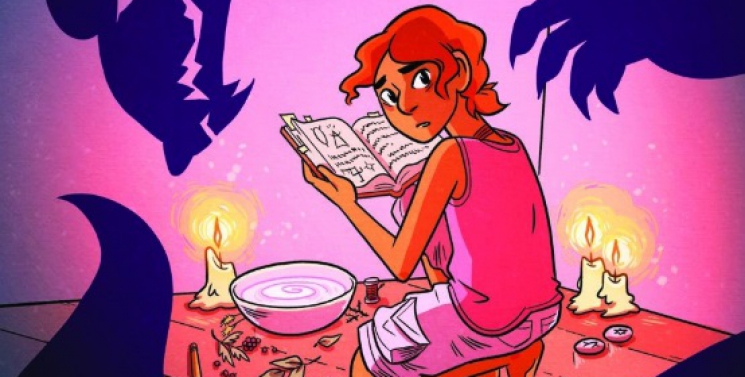
You know The Witch Boy, this whole family of magic everybody has magic and then The Girl from the Sea there’s one magical creature and then The Deep Dark there’s another one even smaller magical creature so there’s less and less magic.
But what I love about it is that it’s it’s what I want to draw and magic is just really fun and interesting things and creatures to draw but it also can act as a metaphor and it can allow you to do sort of a subtle a subtle metaphorical way of exploring different issues and exploring different feelings rather than having to address them really head-on and and give them names. You can sort of talk about the magic instead and that can be a way to explore feelings. I’ve also found that that ends up making the metaphor feel more universal.
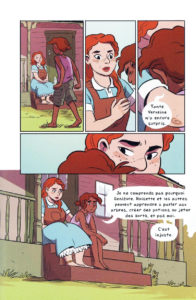
For example in The Witch Boy series a lot of people read Astor as being a trans girl transgender girl and I think that that’s a really really good reading that’s very very valid but it’s not the only one ! And what I like about that story is that it can mean a lot of different things to a lot of different people so to some people they read him as a trans girl some people read him as gay some people are just thinking about « I don’t want to play sports and everyone in my family plays sports ». And so this is so you can relate to it on all these different levels so that’s why I enjoy the metaphor of magic.
You’re saying you’ve always liked fantasy books, have you been confronted during your teenage years with stories that have supported your own questioning ?
Yeah some of them were really really big books for me when I was a teenager because we didn’t really have graphic novels in the States at that time. There were some people reading manga but I didn’t know about it when I was a teenager.
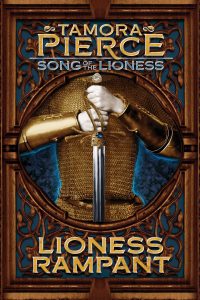
So I loved books by Tamora Pierce who would write stories about women who were knights in this fantasy world, all female characters. I loved authors like Diana Wynne Jones and Diane Duane. The Lord of the Rings was very very big for me of course that’s a classic so yeah those were some of some of the books that really served too. I had a fantasy world that I was always going to and it was built up out of those books.
“I read the books so fantasy was always in my head and magic was always in my head.”
Is it because you read fantasy books that you began to work on fantasy or is it because the offer was limited so you needed to give more of that kind of story to the world ?
I think the former ! I read the books so fantasy was always in my head and magic was always in my head. I keep trying to make an epic fantasy, a high fantasy which is, you know, the whole world is magic, it’s like Lord of the Rings. I keep trying to do that and every time I try I can’t do it. I don’t know why. That’s a challenge that maybe one day I’ll manage to do.
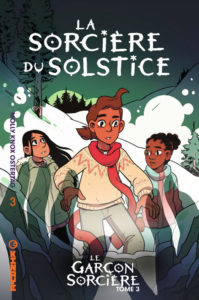
Did you ever envision The Witch Boy, The Girl from the Sea and The Deep Dark as being part of one and only universe ?
I sort of think they are all in the same universe in my mind, kind of in different places. I almost put Astor in the deep dark and it ended up not working out. But in my mind they kind of are all in this it’s a world that is very very similar to ours but if you look in the corners there’s magic.
Is it okay if we talk a bit about politics now ?
Sur yeah !
“More than ever, queer stories are important to tell!”
Okay so, producing art is a fundamentally political act and today more than ever when it talks about gender and empowerment. How do you envision the repercussions of the recent presidential elections on your work and on the minorities you highlight ?
Yeah, it’s really scary. It hasn’t passed yet but I know that part of the agenda Project 2025 was specifically targeting children’s book authors who make work about queer themes and saying that we would be labeled as sex offenders, sexual predators which is just shocking and scary and heartbreaking.
A lot of my books are banned in a lot of different places. I hear about it all the time.I do get daunted and I get scared but my main feeling is that they would not be attacking it so hard if it was not so powerful.
I think I started making these books and I thought I’m just making this self-indulgent fantasy work. It’s the kind of story I want to see, I don’t know if anyone else wants to see it and even if they do I don’t know if it’s important.

I would always kind of feel like maybe I should be doing something more important than drawing my pictures. But to have this work attacked so intensely and also to hear from the children who are inspired to come out and to be themselves to live a more truthful life even if it’s just in the private of their own minds, to hear from those kids and then to see how strong the pushback has been it just makes me more convinced than ever that it is very important to make these stories.
So you think the solution is to continue to publish and continue to write and fight ?
Of course ! And I think I’m definitely thinking about what stories to tell and how to tell them.
A lot of inspiration from recently has been watching a lot of old films that are I know that they’re made by queer people, they’re staring queer people, they’re about queerness but they could not be explicitly about queerness because of the Hays Code* which restricted what films could be about in America.
So I’ve been watching a lot of those and seeing how people still manage to tell their story even if they don’t say the word or they don’t show the act of a same-sex kiss or something. So seeing how we can be clever and how we can tell these stories. They’re never going to stop us telling these stories, we might have to change the language a little bit, but yeah, it’s interesting and I think graphic novels in particular are.
“I’m thinking about ways to hide it from the censors but not hide it from the readers.”
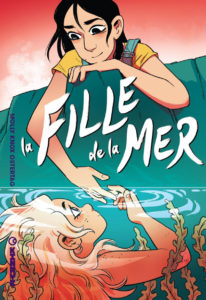
The Girl from the Sea is my most banned book and it’s so easy to pick it up and see two girls kissing each other. It’s such a sweet story, it’s so age appropriate. It’s two young girls having a first love but because they can pick it up and see that immediately without even having to read the book, it gets banned a lot. So I’m thinking about ways to hide it from the censors but not hide it from the readers. I don’t have any solutions yet but it’s something I’m mulling over in my mind.
So, to continue to talk about forms of art you’re practicing, you also work in animation, so how are your different practices reinforcing each other ? How do they work together ?
My favorite thing about animation is working with a team. So having a lot of people involved, it allows you to make such a big world and such a big story.
So my experiences in animation that have been my favorite have just been sort of, you have an idea, you talk about it to your fellow writers, they give you some more ideas, they say, here’s how to make it funnier, here’s how to make it more dramatic. And then you pass it to the storyboard artists and they visualize it and they do something better.
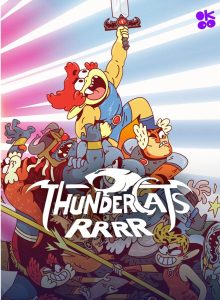
I can do all these things. I can write, I can draw, but when you have individual people doing it, it always becomes better than anything I could have done. So that’s what I really like about animation.
“What I don’t like about animation is that there’s a lot more censorship.”
It’s a lot harder to get interesting stories made, it’s a lot harder to break outside of the box. Talking about queer representation, but also just talking about telling original stories in general, it’s really hard to get them to make something new.
So they bounce off each other. In animation, I get inspired and I can bring that to my comics practice. In comics, I try to see how far I can go and try to expand my ability as a storyteller and then bring that to animation.
“But to me, there’s a power to physical books that I think it’s always going to be my first love.”
So do you think that for now, internet is the place you can express yourself the most ?
I’m not sure. We’re seeing the crumbling of social media. I used to be on Twitter a lot and it has not been usable for a couple years and is really bad now. So I’m enjoying posting my work on Substack. It feels like a place to share with an audience that has committed to seeing my work and so they’re a friendly audience. It’s not going to go outside of that.
But to me, there’s a power to physical books that I think it’s always going to be my first love. It’s always going to be what I’m trying to make because a book can kind of, it can just turn up anywhere.You can pick it up in a library. You can see it abandoned on the street and pick it up and have your entire world changed. And so that is still where I’m the most interested in working.
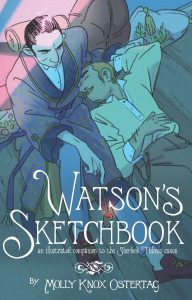
So is Watson Sketchbook going to stay online or is its purpose to be printed at some point ?
I hope so ! I self-published one volume. It sold out very, very quickly. And I’m hoping to find a publisher who will help me do the rest. And that is, I will say, the internet allows me to experiment and to be very playful and to have cheerleaders to support me as I’m making work.
So that has been a really fun project because that started as me just having a fandom moment with Sherlock Holmes and then finding a lot of other people who were interested. And it grew very organically. I don’t know if you know the term “snowballed”. It got bigger and bigger and bigger as it went. So that was fun and I wouldn’t have. If I had to put together a pitch for a publisher, it would have looked really different. So that’s been a really fun process.
“They cannot stop me from drawing queer comics”
So you don’t fear censorship, you’re going to do it anyways?
Sure. They cannot stop me. Listen, they cannot stop me from drawing comics. Perhaps they can ban them. Perhaps my publishers will stop working with me. I hope not because I love my publishers. Perhaps the internet will censor it. But they cannot stop me from drawing queer comics.
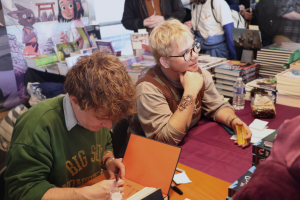
Great, that’s exactly what we wanted to hear ! Thank you for your time and kindness, enjoy the festival !
*The purpose of the Hays Code was to regulate the content of film production by giving recommendations on what was and wasn’t appropriate to show on screen. It was strictly enforced in the United States from 1934 to 1952.
Interview conducted on Thursday, January 30, 2025 in Angoulême, France.
À propos de l'auteur de cet article

Coline Drouhaud
Étudiante dans un Master recherche spécialisé dans la bande-dessinée, Coline est une vraie touche-à-tout. Elle ne rechigne jamais devant de nouvelles découvertes, même si elle garde un goût prononcé pour les univers horrifiques et de science-fiction. Elle écrit chez Comixtrip depuis 2024 pour partager sa passion aux plus nombreux.
En savoir